
Welcome Neil, on the first non-emagish interview :D, how have you been lately?

I’ve been great, thank you, and very busy which just seems to be the normal flow at the moment. My 10 month old daughter, Olive, does new things everyday and makes me absolutely love being a dad. My wife and I are also trying to get through our long never ending list of things to do to our house that was a bit of a “fixer upper”, but we feel very lucky to get it in the first place. I’m also going through edits for my fourth book which is the third and last in the My Fatal Futility trilogy so that’s exciting too.


Neil, for our newest readers, can you please introduce yourself and tell them what you write about?
I’m Neil James Miller Hemfrey which is why my author name is N J M Hemfrey. I’m a self-published author who has so far released three books. One was a grimdark cosmic horror and the other two were hyper violent and time travel/cyberpunk stories.
I’d consider my genres to be dark fantasy and scifi but I do have some horror stuff in the works too. I like to think that I write stuff where the consequences really matter and the ideas I explore have been put through the creative juicer so your mind is challenged. I’ve got over one hundred outlines for other stories that I plan to write before I’m old and dead.
As you know, we (me in particular, I must admit) are huge fans, and given how well you write, there’s no surprise there. From all the books you’ve written, what was the one that you most enjoyed writing and why?
I’ve most enjoyed writing the My Fatal Futility series because it combines genres I’m personally very invested in; time travel and cyberpunk.
I’ve always been fascinated by how the nature of time controls the essence of the nature of the universe and everything in it. How time flows is pivotal to our sense of sanity, perceptions, and identity.
I love cyberpunk because of the wondrous tech integrated into humanity, the sociological effects of serving corporate overlords, and the damn wicked hyper violence of the genre.
Cyberpunk always blows your head off in more ways than one. My Fatal Futility is enjoyable to write because the main character is a reflection of a lot of my feelings so it’s cathartic in some senses. It also allows me to explore samurai culture, insert robot humour, and touch the raw nerves that I think go through everyone’s existential cores.
Your books, always got awards from us, because they are just THAT original and deep, but, Neil, in your experience, which is the book that readers tend to love the most, or get better reviews?
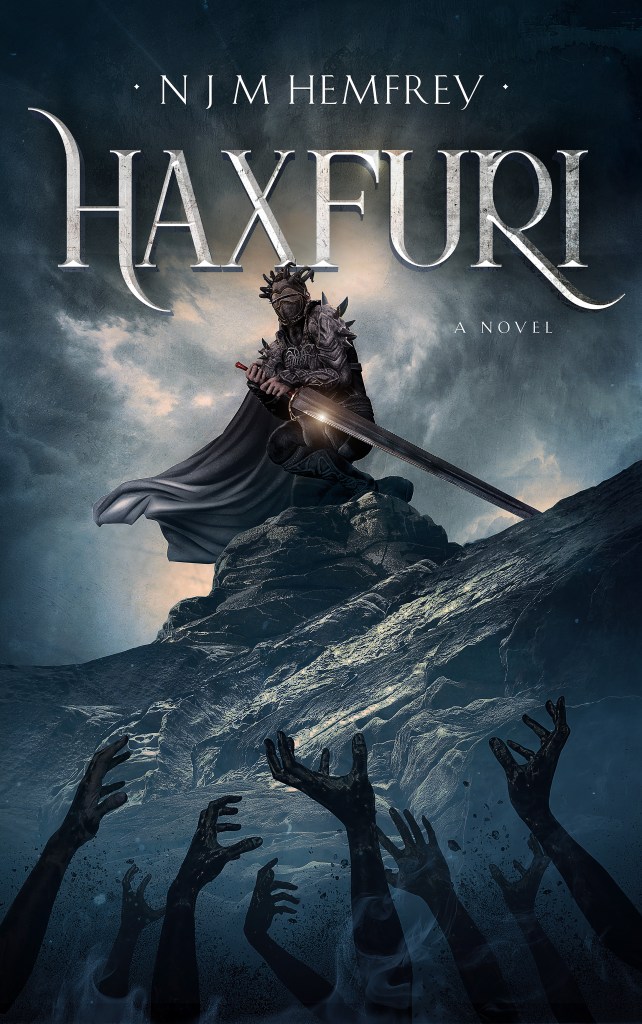
That’s an interesting question because I think more people have read Haxfuri or remark upon it.
I’m not sure if “love” is the right word to use for the experience of readers of Haxfuri but the feedback seems to focus on how the hideous world within the story is so mentally spiky that it snags preconceptions about ethics and gender while pouring an onslaught of lovecraftian terror into you. I think readers really dig the originality of it even if it makes them mentally puke or have a moral crisis.
I think My Fatal Futility gets better reviews as it’s more soulful and humorous and gives people time travel without cliches or paradoxes. I think readers love how they can see how time travel could really work and affect you while getting a good adrenaline spike from the action.
I’m very lucky to have readers at all so my hat goes off to them for taking a chance on me. I’m truly grateful.
What are the best reviews that your books got? That reviews that you were like: “Wow, dang it, all that time writing paid off”?
To be honest, I think the best reviews I get are from Scribbles Worth. The level of detail, analysis, and comment you go into on all aspects of the story is breath taking.
You tap into the ideas and essence of my stories that I feel get missed or overlooked by many. When I read a Scribbles Worth review, it’s very affirming as it reassures me that I wasn’t crazy to write something the way I did, the purpose did come through.

Wow, thank you Neil!
Ok, let us talk about the latest book we reviewed from you, Haxfuri. My first question to you about this book is simple: Why the heck did you write it? What motivated you to write such a complex, gut-wrenching book filled with philosophical despair and impossible-to-escape dillemas?
The funny thing is that Haxfuri began life as a short Batman fan fiction where I tried to imagine Batman in medieval times during a plague. I ended up putting so much original stuff in that it completely transformed into something that barely resembles the original idea at all.
A lot of what makes Haxfuri special and significant is that it explores what I felt were the toxic, flawed, and misconceived notions being pumped out during the Trump Presidency, #Me2, Brexit, and on and on. I really wanted to dig into people’s intrinsic and natural misplaced senses of righteousness being wielded like swords to slaughter whoever slightly offends us.
My background is moral philosophy and sociology so I wanted to demonstrate the hypocrisy everyone is guilty of when following their own societal ideals with emotional prejudice.
The dilemmas are important because consequences really do devastate in the real world whether you do the wrong or right thing. There is a cost to pay whenever you decide to implement a principle which affects others and more importantly the cost can’t always be controlled, if at all. So, I needed my characters to suffer to show what I think is the reality of trying to fulfil a misplaced sense of righteousness.
How long did it take you to write that goodie of a book and can you tell us a little about the process?
It took me about four years as I was still finding my strength and skill as a writer while developing a decent routine. Now, I could probably write it in a year, but then I had to discover the language of putting these ideas into a narrative and learn how to build characters that felt meaty.
The process that developed was get the main story beats laid out in an outline, then decide what ideology drives a character and what are their emotional triggers, then shove these characters into scenes and see how they’d truly react to what the world is doing and what I thought would happen, then let the characters hijack the narrative to its logical conclusion, then edit and refine, edit and refine, edit and refine, until the pace is good and the narrative links are solid.
I don’t really worry about getting things perfect as my stories go through an average of five rewrites/edits to smooth things out.s A story is an organic construct so it’s always exciting to see how it grows by itself a surprises me.
Many times the heroes get all the attention, and we are not going to talk down on Hakon, we love the guy and the crew, but, but, but, Sol-sindar and Sol-sik are truly great, impressive and twisted characters that whenever they are in the scene, they take all the attention to them. Why did you create them and how deep did you have to go into yourself to carve them? ( I seriously can’t imagine a nice guy such as you to be able to do what they did) . What it was like to write about them Neil?
Sol-sik and Sol-sindar really represent what I like about villains. They expose vulnerabilities in our ethical approach while also possessing an understandable perspective deep down.
I wanted those siblings to be tragic yet terrible, and to be sinister yet oddly sane. They are very much fighting against the torment that the world has forced upon them. They are rational in their own ways and readers often remark upon how conflicted they become about the villainous pair.
I write Sol-sik and Sol-sindar to upset preconceived notions about evil and upset in more raw emotional way. Now, writing the horrible things they do was very hard personally. I often think I went too far but I was driven by my core directive with the book of not sugar coating the very real trauma that real people inflict/endure.
The torture that my villains deliver happens everyday somewhere in this world. I didn’t want to undermine how bad things can become for victims. So, writing the more horrible scenes required research that put me out of my comfort zone and necessary mental “time-outs” where I focused on cheerier things. Talking through these scenes with my wife really helped protect my sanity and ensure I wrote something honest to reality.
In short, yeah, it was tough. Those aspects of the Haxfuri world are why I haven’t returned to it creatively for a while (but I do have six outlines for sequels/tales within that world).
Ok, weird question: why do you like to torture and break down your characters Neil? Hahahahahahha
I actually receive that comment a lot which probably says something.
I wouldn’t say that I “like to” but it does always turn out that way so who’s fooling who?

My only defence (*he says with a mischievous smirk*) is that I believe in consequences and the bill coming due. Personally, the greatest growth for me comes from making mistakes and trying hard only to fail in the end.
I’m not easy on my characters because life is effort and interacting with the world is costly. I don’t think the lessons would stick or the morals of my stories would be heart punching if I didn’t hammer home what realistically would happen. Giving characters a magical form of salvation just destroys their agency in my opinion.
I mean everything that does happen in my stories was really the result of the characters hijacking the narrative. I’m as much a victim as you (*he winks and smirks*).
Were you satisfied with the end result of Haxfuri, or you were like, “you know what, this is good for now, but I must step-up in the next book” ?
Honestly, I’ve gone over in my head many times about whether I crossed too many lines with Haxfuri and should have censored myself to please disturbed/upset readers. I’ve felt guilt and shame and downright crazy from people’s reactions to it.
However, on the other side of that emotional whirlpool of angst and self-criticism, I know that I wrote the book that I intended to write, the book that needed to exist as is, and the book that will challenge people forever.
I have learned to be proud of it because I know it has value in its uniqueness.
Still on Haxfuri. Neil, when are we going to have the second book? I know you may be finishing the My Fatal Futility series, but, the sequel for Haxfuri is on the plans, right?
A sequel as well as other stories within that world are planned but I won’t be writing them anytime soon. I’ve got about nine projects I’m going to complete over the next three years. After that, I’ll see where my head is at and if I’m ready to helldive back into the world while balancing what my life looks like then. Rest assured, those sequels/other stories will eventually be realised and released. I owe it to my readers as well as the characters and world of Haxfuri.
Before we go, Neil, for our readers that are like: “I don’t like grimdark fantasy“. What would you say to them that will make them think twice about not reading your awesome book?
I’d say that if you fancy a Batman type struggling to prevent a Lovecraftian nightmare while the political hierarchy “Game of Thrones” each other in a plague-ridden city, then you don’t need to like grimdark at all.
Would you like to say something for your loyal readers, friends and supporters?
Your support is tremendous, heart melting, and invaluable. It’s a lot of mind crushing work to produce a story and it’s amazing people can spend their valuable time exploring the worlds that I create. I’d be hollow as an author without your feedback to light the candle of creative self-worth within me. You guys and gals are the real inspirational deal. Thank you all so much.
Hope you’re keeping well!
All the best,
Neil
 Scribble's Worth
Leave a comment