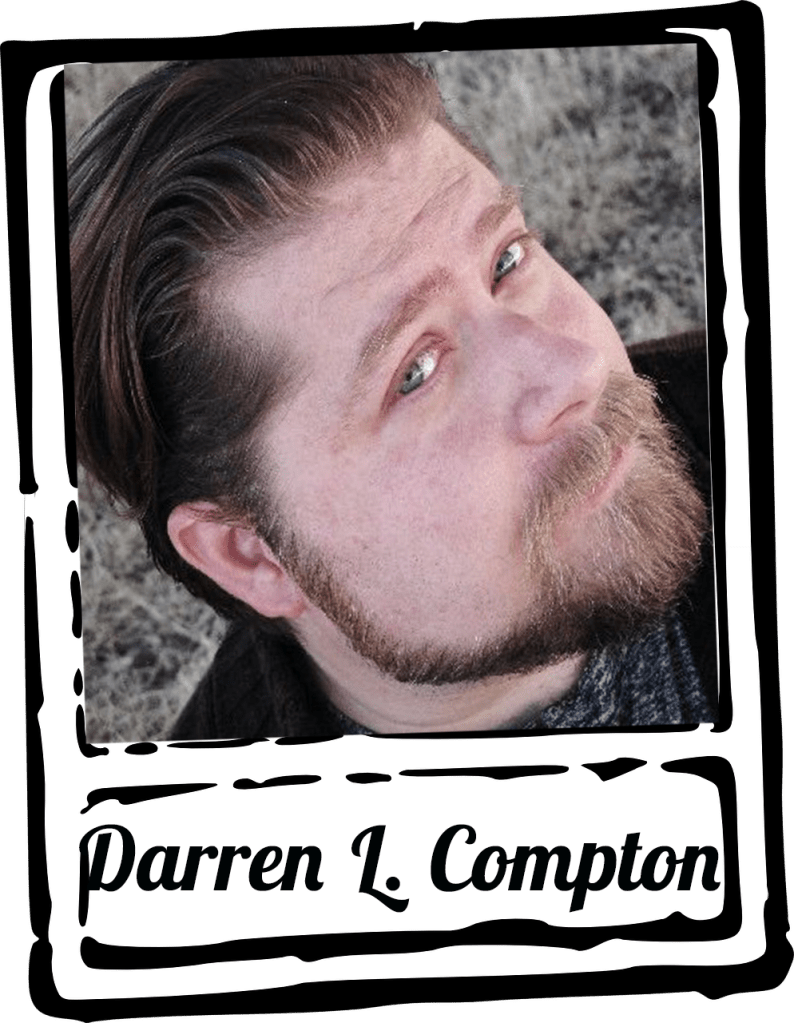
Darren, lets get down to it. You are one of the most detailed
writers we have had on Scribble’s Worth Book Reviews, specially when it comes to character traits, but before we go there, Darren, tell us, how did Graveslinger came about?
Graveslinger first came around as a concept for a graphic novel series, but due to the lack of free time, I calculated I wouldn’t finish drawing it within ten years. That’s a long time to commit, eating up any and all free time I’d have. However, I was still invested with the story and characters that I wanted to share it. A lot of it was inspired by things I’ve grown up with – mostly comics and movies, especially those in the action/horror department.
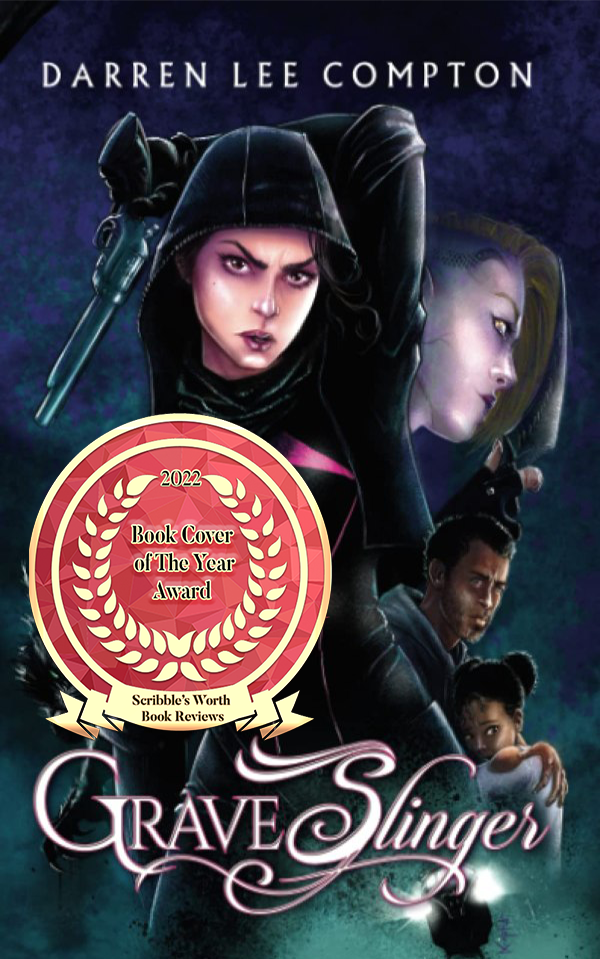
Graveslinger wound up wakening a writing beast in me that I never paid attention to, and I feel like I should’ve been doing this a long time ago. I also discovered I’m a planner when it comes to writing. I have to have things planned out, or else I just don’t finish the project. Graveslinger isn’t the first book I’ve tried writing, but it’s the first I completed, and I highly credit planning everything.
I was watching a documentary on Back To The Future, I think it was on Netflix at the time, and Robert Zemeckis and Bob Gale talked about how they were coming up with the story by jotting things down on notecards, and then arranged them in an order that made sense narratively.

I stole that idea when I was building Graveslinger from the ground up.
Why ghouls? Like, ok, sure, horror books are expected to be
scary, but normally you get zombies, so, why did you didn’t choose the average joe-undead?

While I love the average joe-undead zombie, I guess I just wanted to bring the term ‘ghoul’ back. They’re otherwise still pretty close to the kind you’d see in George A Romero’s movies or the Resident Evil games. I even took some inspiration from the zombies in the films [rec]. I pretty much cherry-picked my favorite ingredients and made my own cake.
Ghouls, or zombies, provide great fodder for a monster-hunter to cut through, and at the same time a suspenseful obstacle blocking everyone’s path. The origin behind them in my world is supernatural-disease based because I thought an unknown origin has been over-done. I also didn’t want to tread the same ground of it being designed in a lab by scientists.
Another thing, why a female main character, I mean, as a man,
wasn’t it hard for you to write Fiya? How did you manage to make her so believable?
This might be strange to say, but I put a lot of my own personality into Fiya. Her anti-social quirks and everything? Those are shades of me. It might’ve been cheating a little, but it is what helped me speed up the process.
You can create a character based on an archetype, but you still have to figure out who they are, how they tick, their likes, dislikes, and their goals. I like the idea of strong female hero characters, but they work best when they’re fleshed out. Don’t be lazy about it – it will show.

The opposite sex are people too, so treat them like it. Take advantage of beta-readers too that match the gender of your main character. Having listened to many female friends about their thoughts and how they feel about things over the years, I feel like I had a softer landing.
In the beginning, I’ve never had a concern over this issue, it wasn’t even a question in my head, it was only during my editing phase that I noticed others complaining about male authors writing female characters online. Of course, the most ridiculous examples anyone can find were always used as evidence to why all men shouldn’t write women, and they can be really ridiculous, but I didn’t let that stop me. I just made sure I took Fiya seriously, and not say anything like “she breasted boobily” or anything like that. If anything, I looked at those examples as things NOT to do, rather than just not write female characters, even if to me it seemed like common sense.
Looool, boobily, hahahahhaha. Ok, lol, now, back to the question. You are one of the most detailed writers that we have seen so far, so, Darren, tell us, how do you go about character development?
For main characters, I try to go into heavy detail, even if I don’t use the information in the manuscript. Lesser characters I have more of a loose profile made up. Maybe it’s because I’m also an artist, so visually I have an idea in my head, so I’m doing my best to communicate the details.
Regarding character development, I do my best to think about what a character needs to go through that helps the overall story. I do try to think about the journey they need to go through, I think it helps make them relatable.
How deep do you go in making the traits, motives and backstories of the characters? Because you just NAIL it, every time!
I found a 500 Character questionnaire on Amazon that was pretty helpful in this department. Though a few of the questions were repetitive, it did help me get super detailed and helped me to keep track. Again I likely won’t ever use most of the information, but it’s there just in case I need it.
Characters deserve to have a backstory that helps propel them into the story. I know I broke some rules regarding flashbacks (I never new how much people hated flashbacks before this project), but I really wanted to put Fiya’s backstory throughout Graveslinger, and I feel like it helped provide meat to the overall story.

It wasn’t just details for me, I felt the need to share her background with everyone. I broke her backstory up into three sections and placed them strategically in the main narrative, typically after a tense or action-driven sequence to serve as a cool-down.
I’m a believer that if you don’t give the audience time to cool down before the next adrenaline rush, they’ll become numb to it.
For flashback haters out there: don’t worry, the next few books* won’t feature any.
I’m also heavy into playing Dungeons & Dragons type of role-playing games, so I’ve had a lot of practice building characters up from nothing.
Action scenes. I mean, in Graveslinger, the action scenes are so
vivid that you might want to dodge those punches and slashes. How do
you go about creating them? How can other writers improve their
descriptive abilities?
Thank you! I think approaching it from a comic-book point of view in the beginning probably helped, because I had every panel planned out. Every close-up, every angle, and every establishment shot. I basically had it storyboarded.
I’ve never really read action-oriented books before so I didn’t have anything I felt I could research, so I had to wing most of it. I’ve read many James Bond books, but they have a lot less action in them compared to the movies. During the beta-reading process, the best advice I got was to break up the paragraphs when it comes to the action. If you want the action to be detailed, but moving fast, you do not want to hit the reader with a giant wall of fat paragraphs.
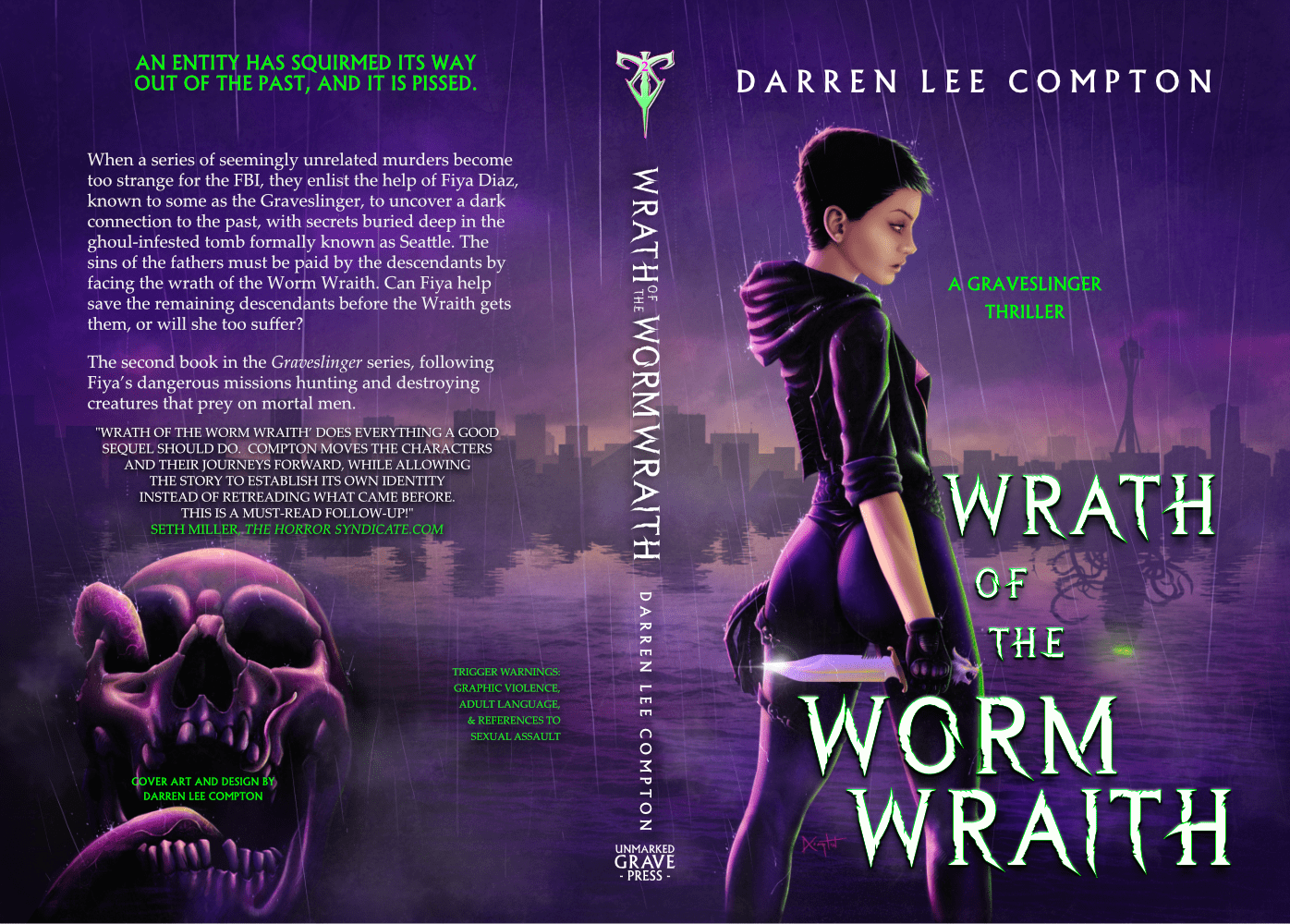
We have reviewed the two books of your series, one is in pre-order right now, Wrath of the Worm Wraith, that is fantastic, creepy and drives goosebumps. Which one was your favourite to write so far and why?
Of the two? I think Graveslinger will have a special place in my heart because it’s the first and I hit everything I wanted with that one. Wrath of the Worm Wraith is more of a test to see where I can push things that started with a few “what if’s?”. Of course, I love it too, but I feel I may always have a bias for Graveslinger. Several beta readers liked Wrath of the Worm Wraith more, so what do I know?
On the second book, we noticed that you eased on the action and
throttled on the horror and thriller part, both in the sense of
mystery and suspense, and it paid off. Why the change though?
With the series, supernatural horror will always be the backbone. Whether it’ll lean more on a thriller/suspense side or on the action side, depends on the story at hand, and I feel I created Fiya in such a way that she can straddle both.
Sometimes the story just doesn’t call for a crazy amount of action, but other times it totally calls for an epic video-game-style boss battle. The change allows me to be flexible; I wouldn’t want to get bored keeping myself too boxed in.
I think that because the first book, Graveslinger, was originally intended as a graphic novel, dynamic action sequences were more prominent. Wrath of the Worm Wraith didn’t get this setup, so that could also be why there wasn’t as much of a focus.

The theme surrounding The Wrath of the Worm Wraith is profound.
Why did you go that way?
Without giving anything away, I went about it by paying attention to things in the news and applied how something like that might have gone down. Our history isn’t pretty- it’s loaded with horrible decisions, actions, and atrocities, but there’s nothing we can really do about it. We just deal with what things are and just push forward, trying not to make the same mistakes.
This was a situation where I wasn’t exactly sure where the theme might lead, but as I kept unfolding the outline it seemed like the only direction it could go. I knew it would be dark and dour, but it needed to be. I certainly didn’t expect it to be called profound, I’m very flattered to hear that.
Who will love to read this second book? What type of reader will be pulled towards this creepy paranormal and action-filled part of the series?
I think anyone who enjoys Urban Fantasy or Speculative Fiction that isn’t for romance will enjoy Wrath of the Worm Wraith (our review here). If you enjoy the Resident Evil Games, horror-themed comic books, or even the show Supernatural, you will enjoy Graveslinger (our review here).

Being a supernatural Horror/Thriller/Action series, it did make it difficult for agents to understand and not want to touch it, but I feel like an audience is definitely out there for Graveslinger. There are monsters, blood, violence, creepy crawlies, fodder, and hopefully at least one thing in each book that makes someone say to themselves: “What the hell?” It’s definitely not PG13 material.
There is a third book in the making, can you talk a little about it? The title is promising.
I sure can. Breath Of Blood is a vampire story that takes inspiration from both Agatha Christie murder mysteries and Ian Flemming’s James Bond thrillers. It’s a smaller-scale story compared to the first two books, but one I had a lot of fun writing. It started off as a NaNoWriMo project, tackling it “pantser” style – making it up as I go along, but once that NaNoWriMo month was finished, I outlined the rest of it.
Before we go, Darren, would you like to say something to your readers and supporters?
I appreciate every one of you, and I hope ya’ll stick with me on this journey. I wish I can crank this out faster, but I’m doing the best I can on my own. As Stan Lee said in Mallrats, “You keep reading them, I’ll keep writing them!” I still have a few Graveslinger books up my sleeve, so I hope ya’ll are patient.
Thank you so much for the time Darren, please keep writing your amazing books! Cheers!
Cheers to you, my dude!
 Scribble's Worth