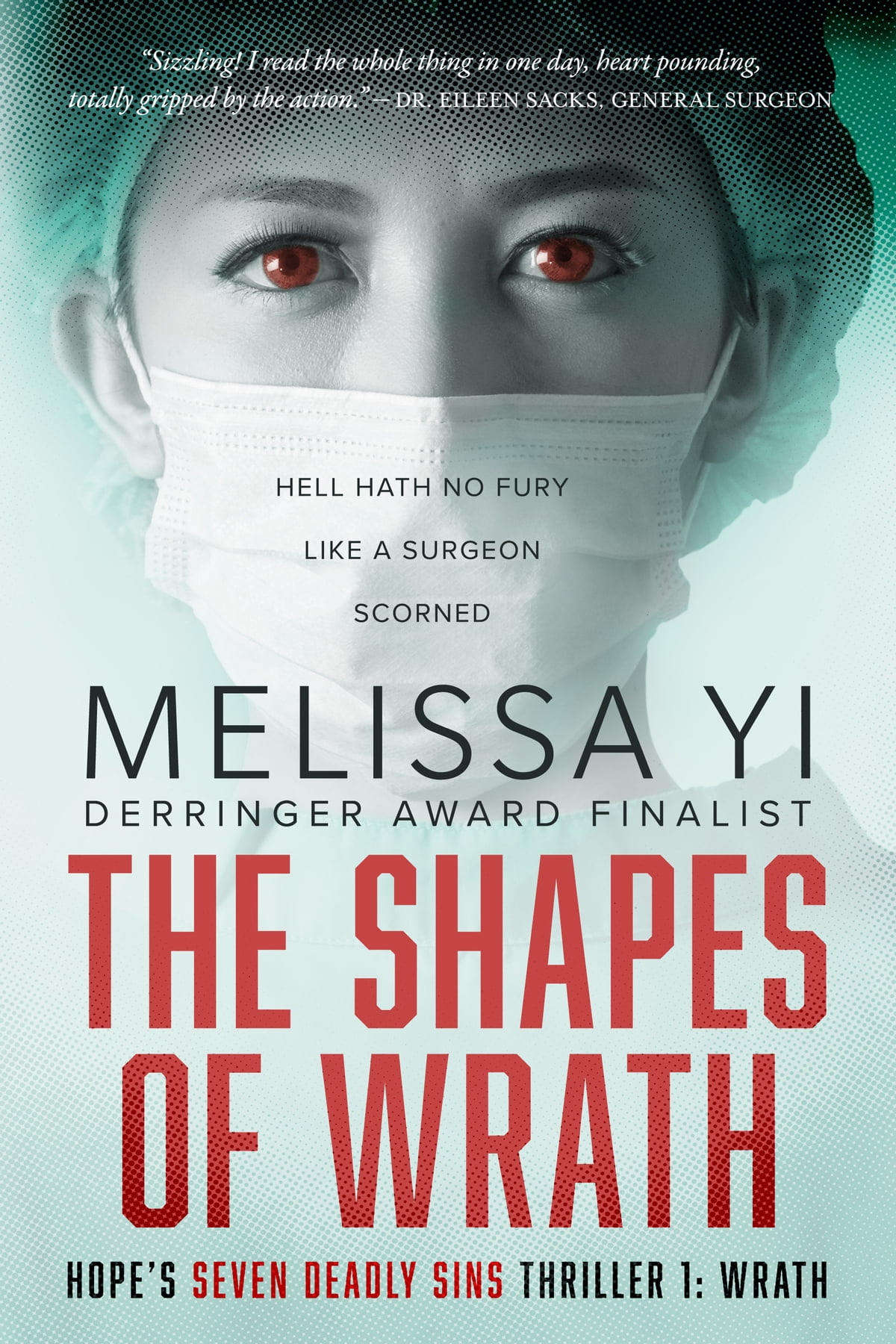
Shapes of Wrath is unique in that it was simultaneously refreshing and nostalgic. Given that the human body is one of the most mysterious topics, it is no surprise that mysteries often use the medical field as a setting for their plot. This is where the nostalgia comes in. While reading this book, I found myself playing the action out as an episode from Diagnosis Murder or even Kingdom Hospital (given the supernatural element).
Dr. Vrac was reminiscent of Alec Baldwin’s Dr. Jed Hill from the 1993 movie Malice. Yi’s Dr. Vrac holds a place as one of the top ten most despicable characters I have ever encountered, and that is an accomplishment! The addition of the supernatural element and the explicit discourse on themes of gender and racial discrimination, bullying, sexual harassment, and megalomania perpetuated by those in authority—in a field whose oath and motto is “First Do No Harm”—refreshed a story that had been told before. TK and could be transposed into any other field or setting.
As the first book in a series that explores the seven deadly sins, it is no surprise that the plot was somewhat predictable. Wrath is often linked to revenge and ego, so a plot that focused on a character whose megalomania and fury led to the demise of several other characters is par for the course. The novelty emerged when Yi used lesser characters to explore the merits and disadvantages of varied degrees of wrath. Yi’s writing was so immersive and relatable that I found myself angry on many levels—and not just with the villain. In the book’s acknowledgements, Yi stated:
“Anger is a double-edged sword. Too little and you risk drowning in passivity. Too much and you immolate yourself and everyone in your path… strive for a judicious amount of anger, like pepper in a stew.”
Her understanding of this often maligned ‘sin’ is reflected in her interpretation and presentation of its layers, which injected a sincerity, humanity, and insight that explored how wrath can breed in a high-risk, high-stress environment.
As mentioned earlier, Yi used the overarching theme of wrath to discuss racial discrimination, bullying, sexual harassment, misogyny, and megalomania. These themes are global challenges. By condensing them into the pressure cooker of a hospital, Yi cunningly created a metaphor for society at large. These observances grounded the plot, cemented the themes, and allowed for layers to bloom in mostly stereotypical characters.
This book slowly built up tension that bewitched me with each revelation. As the pages flew through my fingers, driving me towards a surprising yet relatable culprit and a somewhat ambiguous conclusion, I became fully invested. Well written and paced, this medical mystery thriller showcased Yi’s medical background and research. Each procedure, medicine, and anagram were explained in detail, which added to the world building and descriptions, and her attention to detail was unparalleled.
That said, clarifying everything took me out of the story. I skipped through some of the explanations just so I could get to the action. As the story progressed and the mystery took over, these explanations were few and far in between, which helped because their preponderance earlier delayed my engagement. Of course, that is a subjective observation.
Yi injected a supernatural element into the plot with Tori’s clairvoyance and then through Hope’s inexplicable psychic link to the villain. This infusion of the paranormal served a dual purpose. Firstly, it spoke to the Asian culture where folklore, myth, and the paranormal are embraced as a part of life to be respected. With many of the book’s characters being Asian, it set up a dichotomy between their culture and the world they live and work in, namely Western society and the medical field, which disregard many unexplained circumstances and/or relegate them as superstitions and feats of fiction. The inclusion of the supernatural also added another layer to the mystery being solved by imbuing Hope with an ‘inside’ that she would not normally have. It also gave her a duality as her feet were firmly planted on either side. The supernatural element enabled Yi to comment on Western society in relation to its treatment of those not born in that hemisphere, and thus, circle back to the theme of discrimination.
Shapes of Wrath is the first of a series involving the lead character Hope Sze and the seven deadly sins. As such, there is a bit of ambiguity left in the book’s compelling conclusion. The prevailing mystery is solved, and questions regarding that mystery answered, but Hope’s sudden ‘supernatural ability’ was left in the air. Other vague aspects included the character, Ryan, and the love triangle between Hope, Ryan, and Tucker. Presumably, these took place in earlier books, but little information was given to accommodate new readers.
Shapes of Wrath grows on you much like the deadly sin, slowly and steadily… but once it starts building, there’s no escape until it is fully expelled. This is a slow building page-turner with an ending that will leave you breathlessly anticipating the next book of the series. Shapes of Wrath is a compelling introduction to the Hope’s Seven Deadly Sins Thriller series.
Pros:
- Author’s experience and research in the medical field added authenticity to descriptions of procedures, medicine, and inner working of a hospital
- Relevant themes addressed refreshed the predictability of the plot
- One of the best-crafted villains ever
- Exploration of the various levels of the overarching theme added dimension
- Implementation of the supernatural
Cons:
- Early on, the writing is a bit cumbersome. It has some minor language errors (use of double negatives (pg. 101), poor idiom choice and explanation (pg. 70), and too many minor characters with interchangeable names, which led to some confusion
- Explanation of every procedure, medicine, and anagram can become tedious and detract from the plot’s immersion
- Lack of background for some characters and events mentioned from earlier books
 Scribble's Worth
Leave a comment