
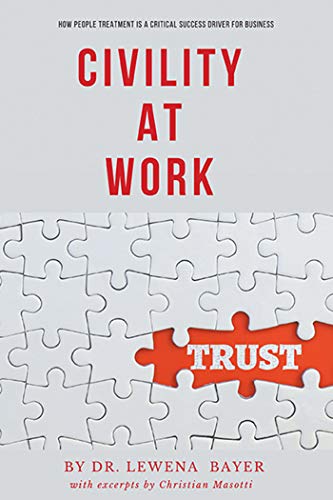
Many of us spend our lives working hard to learn skills that will be valuable, and demanded on the workplace. Yet, we neglect essential soft skills, seen as “nice to have“, such as Civility. It should be a no-brainer, the fact that employers should treat their employees well. Respect the fact that they are working, and that they are people with needs as well. But, this is not the case in our day-to-day lives, now is it?
Dr. Lewena Bayer’s surprising, and much needed book explains the high need of civility in our lives, starting from our workplaces.
Some would ask: “Why would we want to be civil with one another at work? Is there such a need?” or even, “Aren’t people are getting paid to do their tasks right?“”
You only need to think about your usual workday to get the answers to these questions. Most of us have experienced unfair or rude treatment by an employer and felt our morale drop.
This book not only about civility per se, but it’s about:
- The forms of uncivility at work, and how they affect the workplace
- The effects of uncivility at work to employees and how it affects company performance
- The roots of stress at work and how it uncivility is the origin of such stress
- How can civility can help increase moral, mental health and performance of employees
- How can individuals and companies apply civility at work and the benefits
That, and much more!

This book is great! It makes us think twice upon subjects that we take for granted and see as unimportant, but that will drive our long-term success. Who would’ve known that knowing how to be civil with other people greases your way up and adds to the workplace’s well-being?
The issue of uncivility is addressed with data and logic, not neglecting the current social conditions such as COVID. With solid research and experience based knowledge, Dr. Lewena Bayer, gives tools to be civil at work and make a better work-environment. She also calls to attention damage that lack of civility does to mental health, by referring to research in the field:
“The Center for Disease Control states that adult depression, largely attributed to stress at work—which in turn is largely attributed to incivility—will rank second only to ischemic heart disease as the leading cause of workplace disability in 2020. If this statistic in and of itself does not present a strong business case for civility at work, I do not know what does.”
An interesting explanation is made between depression, stress, self-preservation and uncivility at work.
“If this depression can be largely attributed to stress at work, and the cause of stress is incivility, why are employers not working harder to foster civility at work?”
There is an eye-opening approach to how civility improves the mental health of others and how it affects the revenue of the company in a positive way. NICE!
We love how the correlation between the mistreatment of people in the workplace is made to other sectors of our lives, such as at home, school, neighborhoods and so, our societies.
Things like apathy, neglect and individualism are factors that not only contribute to increased stress and poor-performance in the workplace, but also to the decrease of mental health in general as individuals and as a society.
This book makes us realize how much we as a society are choosing to disregarded other’s needs to have our own way. Heavy research from credible sources behind such claims help to bring the point home.
A great detail about it this book is that, the author questions what the results say and what people imply through them. This shows the author’s awareness in understanding what the articles were saying, the meanings between the lines and what people would understand, or led to understand through them. Excellent!
The conclusions of the researches are frightening, but not surprising for anyone that has worked a day in their lives. A good example of this is how governments, institutions, companies and employers say, and agree upon the benefits of the strategies presented about civility, and what data shows as a result of their action or inaction. This only makes the book more relevant. We love that this book is straight-forward with a fact-driven approach.
Dr. Lewena Bayer also shows how people feel when they are well-treated and how they report feeling when they are trusted in their roles. The book is also interactive, as there are “exercises” in this book that you are invited to make, lists to check-mark yourself in certain behaviors/experiences for you to see how affected you are by uncivility, giving even more strength to their case. Great stuff!
The fact that the author has the presence of mind, lucidity and experience to know the difficulties of implementing civility in the workplace, and the struggle that one will have in trying to convince upper management of it even presenting a great case for the company, is refreshing and comforting, because we are being prepared mentally for the challenges ahead without a “rosy picture” in mind. Very nice.
The information in this book is precious, and nobody that works, nobody that LIVES with other people should ignore what the author is saying.
Civility is a skill that we all should and can have. Not only because it will make us better, but because it will make others people feel better, valued, respected, motivated and will help in their mental health and the quality of their lives. Great stuff right here. If you work for someone, have employees, a small business, or a small team, you should read this book right now. You should get yourself a copy.
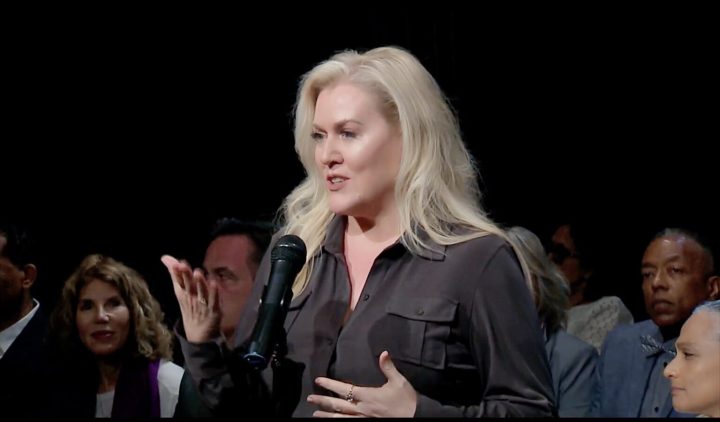
Here’s an interview podcast with the author about this very book!!
Pros:
- EXCELLENT research and explanations
- EXCELLENT points when advocating for the implementation of civility in our lives
- EXCELLENT points when reminding us of the consequences and roots of uncivil behavior
- The author has an experienced and realistic picture of the challenges of implementing civility at work,
- The author is unbiased, and presents both sides of the argument
- Exercises to test the reader’s understanding and retention of information
- There is a clear discernment between what we think is civility and what is not, and how do they differ, which is enlightening
- There’s a walk-through when it comes to the implementation of the civil strategies at work
Cons:
- The research references could have been put in a separate section of the book to aid reading
 Scribble's Worth
Leave a comment