The Science of Monsters: the truth behind zombies, witches, werewolves, vampires and other legendary creatures by Meg Hafdahl and Kelly Florence5
Being a horror fan since 6-years-old, I must say that this book is the book that I would have devoured at that age. The Science of Monsters satisfies the curiosity innate of the horror genre. It answers the ‘whys?’, the ‘how comes?’ and ‘reallys?’. This book takes three movies emblematic of each sub-genre and delves into these questions in a relatable, personal and yet academic way.
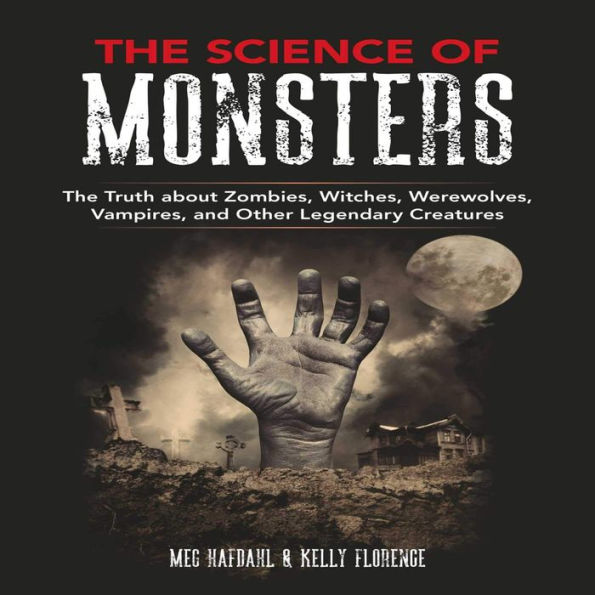
There is no doubt that Hafdahl and Florence, the authors, are fans of the genre. Their approach and their tone were reverential. There is also no doubt that these authors are thinkers and academics. Each section and each movie chosen is explored from a position of curiosity and awe. Their narrative is conversational and relatable. Although the book’s thesis is to demystify and analyze the genre’s probabilities through scientific explanations, it is presented with a genuine respect for the genre and its filmmakers as opposed to a desire to discredit or invalidate the creative process of these filmmakers.
The first movie of the genre to scare me genuinely was called Hell Night, I was 9 years old, and it was my first experience with the slasher sub-genre. To this day, that sub-genre is my favourite and I was excited that it was up first. Using Halloween, Child’s Play, and Nightmare on Elm Street as the three films, Hafdahl and Florence explored the inspiration of each director by looking at the probabilities of specific plot devices used. The ‘child killer’ and the ‘survival possibilities’ were explored with Halloween. The use of dolls in the genre and the inherent duality they occupy in our minds, as benign and evil, as well as mechanics of investigating a crime committed by a doll was examined through Child’s Play.
I especially enjoyed the interview with a former detective as to how he would go about identifying a doll as the culprit. Night terrors and sleep paralysis were scrutinized using Nightmare on Elm Street. I must commend the inclusion of cultural references in this conversation, as they undoubtedly influence the creators of the genre while also speaking to the audience’s consumption and interpretation of the subject matter.
The second section, Serial Killers, was explored through the movies Psycho, Texas Chainsaw Massacre and The Silence of the Lambs. I must admit that I always associated serial killers with slashers and thought them interchangeable. Regardless, this section introduced me to a couple of people that escaped my years of true crime consumption… Ed Gein and Dr. Alfredo Balli Trevino. I knew that Texas Chainsaw was loosely based on reality as was the infamous Dr. Hannibal Lecter, but these names eluded me. I was fascinated by the similarities and how each film pulled inspiration from these people. I still think both sub-genres are interchangeable, but I can now appreciate their differences.
Hafdahl and Florence also explored vampires, ghosts, witches, reanimated corpses, the possessed, deadly animals and creatures, as the subtitle of the book indicated. By touching on each sub-genre, Hafdahl and Florence ensured that this book would appeal to every long-term fan and novitiate of the genre. Like the consumers of the genre, each reader will gravitate towards a favourite section. That said, each section is rife with ideations linked to various plot devices within each film explored.
These authors did not shy away from anything! Topics ranged from the obvious: taxidermy, phobias, the black-market body part industry, parasites, hypnosis, and subliminal messaging to the not too obvious: cultural references to burial practices, anthropomorphism, female motivations, folklore, mythology, and animal behaviour. The authors also provided very practical advice for navigating the forest or woods should one get lost… who woulda thought??
I appreciated the inclusion of interviews with a variety of experts as well as the visual aids. I must commend the authors for the amount of research that was so very eloquently and succinctly presented and analyzed in the crafting of this book. The links made within and outside the genre through various decades, sources and across areas of study were mind blowing! What an accomplishment!
The Science of Monsters is equally academic and colloquial, which is no easy feat. From the introduction, I felt a kinship with Hafdahl and Florence. Their love of the genre is palpable. Their thirst to satisfy their curiosity about the connection between the genre’s inner-workings and science, or by extension, reality, is valid and understandable. With each film, a question is raised and answered, thereby leading to another question. The book’s pacing made it easy to digest and enjoyable to savour. Each layer was as delectable as the one that came before.
The cultural links of young South Asian men to sleep death, the ties to true crime, the mechanics behind the spiders of Arachnophobia, each reveal or hypothesis demanded and garnered an applause. I will admit that there were a couple inclusions of interviews that I questioned. I thought them to be distantly, extremely distantly, related to the subject matter but I could understand the deviation that led to the line of questioning, and I did learn something… kinda. That said, this book was quite simply fascinating!
I wondered if by attempting to pull back the curtain on these wizards of horror, the authors would de-fang the genre leaving it toothless and void of any mystique. On the contrary, the questions raised and answered in this book, if anything, enhanced the genre’s fear factor.
Hafdahl and Florence are horror nerds and I completely identified with them. This book was a conversation full of respect and admiration between family, the horror family. Whether you were born, adopted, fostered, or married into it, once you sit through a meal / movie with us, you become a member of the family. The Science of Monsters is the perfect welcome mat and should grace every horror fan’s house! Do come in and pull up a chair…
Pros:
- Personable and interesting narrative
- Well researched and presented, easy read
- Inclusion of interviews and visual aids provided the academic elevation to the subject matter
- Inclusion of endnotes and index to facilitate further reading and research
- References to other films in the sub-genre
Cons:
- NONE
 Scribble's Worth
Leave a comment