From a very early age, I have been captivated by folktales, folklore, and mythology, and if you are like me, you want to pay attention to this book by Kathleen Ragan, that systematically expresses an adage that I firmly believe, which is “the past informs the future”. Why We Tell Stories was an unexpected read, but I appreciate it for giving concrete evidence of the importance narratives held in the past, their role in the creation of the present and how they will and should inform the future.
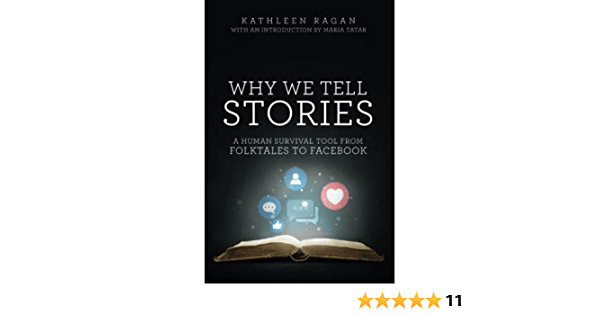
Why We Tell Stories succinctly and practically analyzes the role of narrative (not exactly the same as folktales), its purpose, evolution, and relevance through three identified periods of time. Broken down into 3 parts, this book was more academic than I anticipated.
Honestly, it read like the author’s dissertation. Ragan’s thesis was compelling and her inclusion of presentation tables, visual aids as well as snippets and entire folk narratives grounded her research and helped to break up the wordiness of the narrative’s pacing.
I do acknowledge that my use of the term ‘wordiness’ is contrary, especially when discussing a book on narrative, but there is such a thing and while this verbosity showcased Ragan’s in-depth research and analysis, it was laid thick which slowed down the reading and had the tendency to become tedious (even for someone fully vested in the topic). That said, the book’s format established that it is a work of academia and as such, elevated its tone so that it cannot be easily dismissed or discounted as many tomes on this said subject matter have been and continue to be.
As intimated earlier, this book’s format followed a dissertation template with part one introducing the topic, the genesis of the research and identified the three periods (oral, literate, and electronic) being examined, a launching pad if you will.
Part two presented evidence and comparative analysis of the evidence concluding with the author’s perspective, while part three mounted the author’s defense by answering possible questions that could be raised. This structure was unexpected as the book’s title and impetus (Cinderella) impressed a more fluid discussion around storytelling and folktales.
Regardless, this book’s exploration into narrative and language was compelling. As per any dissertation or thesis, the analysis of the evidence became cyclical and somewhat repetitive as the four main points were extrapolated and ‘Re-Presented’ in multiple ways to validate Ragan’s thesis.
Ragan research was thorough and extensive. Her inclusion of scientific evidence was especially potent as narrative and language and storytelling are often trivialized and categorized as a ‘lesser’ subject. By this inclusion, Ragan levels the playing field and firmly plants narrative and language shoulder to shoulder with the subjects delegated as ‘more’.

In chapter 8, Ragan seemingly took off her ‘professor’s cap’ and indulged a personal anecdote and that break in the analysis and elucidation was endearing and personable and relatable. I wish more of these instances occurred because it would’ve engaged the reader more by injecting a ‘theatre-in-the-round’ essence that would enable the reader to associate with Ragan more.
Based on the book’s blurb, I anticipated a more female-centric tone and perspective. That said, Ragan’s inquiry regarding the female voice in the evolving narrative and the impact of its absence in the crafting of the future is relevant and provoking. In fact, I believe Ragan could’ve taken it further by exploring the patriarchy in the establishment of past narratives and storytelling in each of the periods she examined, not just the electronic.
Why We Tell Stories asks the right questions and proposes a genuine way forward. Indeed there must be an inclusion of all voices as well as an assimilation as opposed to a replacement of past narratives in crafting a better future. Though I believe this book to have a definite audience and that is one steeped in academia, I do believe that it is an enlightening read to everyone, as it shines a light on an often overlooked system: storytelling…
Pros:
- Compelling Introduction by Maria Tatar
- Inclusion of folk narrative, visual aids, and presentation tables
- Academic format and inclusion of scientific evidence elevates the subject matter
- Well researched
Cons:
- Academic focused with an unexpected format
- Expected more storytelling
- Not as female-centric as alluded to
 Scribble's Worth
Leave a comment