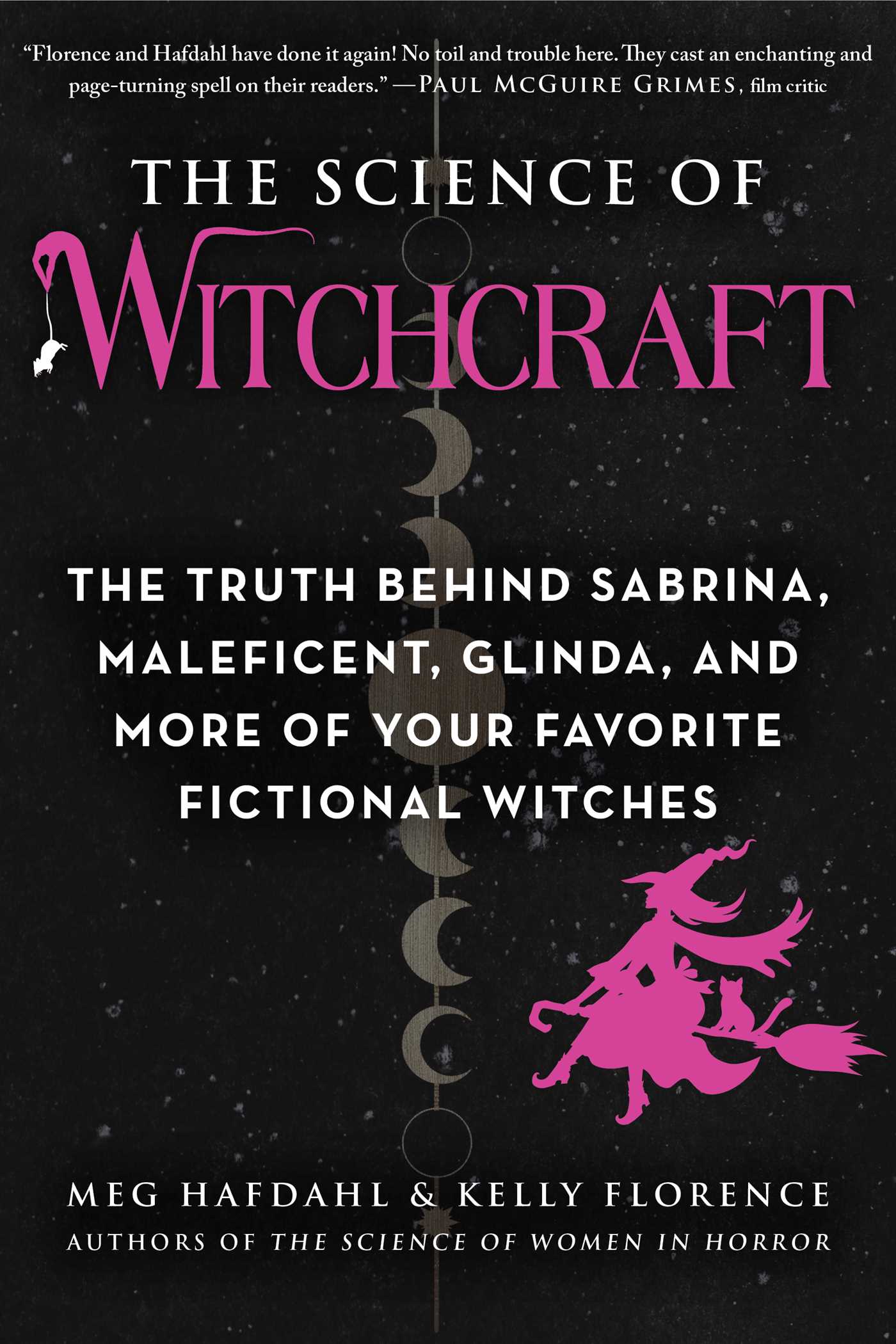
The Science of Witchcraft: The Truth Behind Sabrina, Maleficent, Glinda, and More of Your Favorite Fictional Witches by Meg Hafdahl and Kelly Florence
Like the authors and many women and girls, I have been and continue to be fascinated by witches and witchcraft. As the sole female archetype in the horror genre, the witch stands as both legacy and heir never to be dethroned or rivalled. It is why the witch is a constant resource as the character can be re-imagined in many different forms as she transcends race, gender, or culture. She exists within and without realm or dimension and so the interest in her will never wane. This book is an ode to the witch as the authors’ showed great reverence in their analysis of the character.
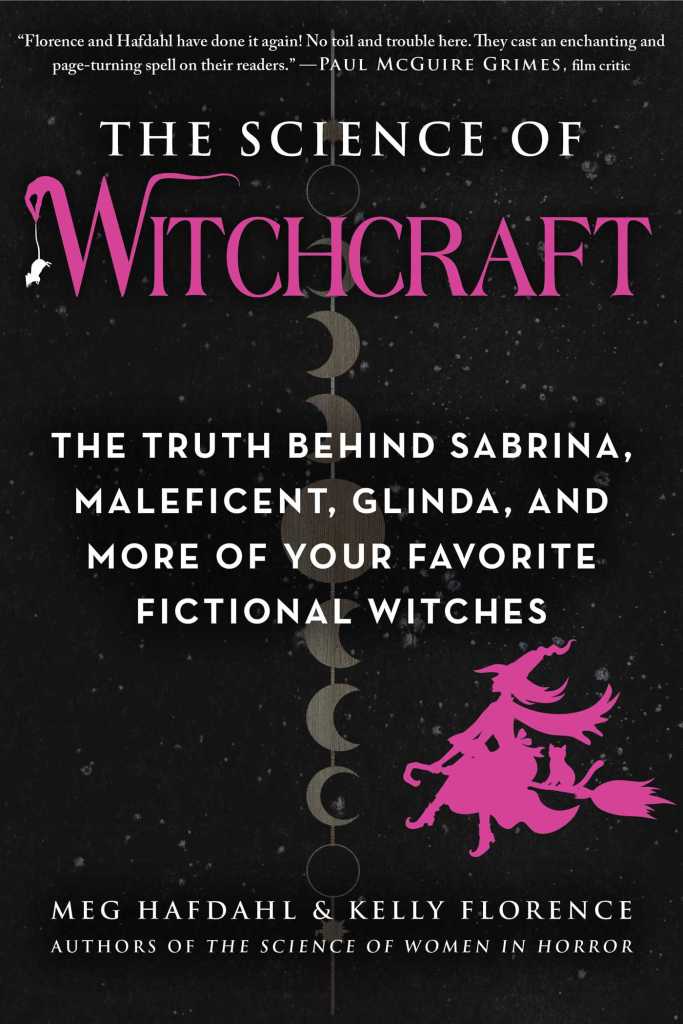
The Science of Witchcraft: The Truth Behind Sabrina, Maleficent, Glinda, and More of Your Favorite Fictional Witches sought to dispel and explain many of the facets of the witch, her origins, and her depictions as monster or other in fairy tales and television. This task served a dual purpose as it alleviated the witch of her ‘power’ by disclosing scientific causes for her abilities while bestowing even more power to her understanding and ability to manipulate nature and mankind to achieve her goals.
Many films were used to address each trait, and while these choices were personal and sought to direct the reader, they were objectively surveyed. As a fan, I recognized the films and realized I had come to some of the same conclusions from my readings and viewings, so I can’t say I discovered anything new while reading, but the argument was well written and researched. Anyone with a passing interest in witchcraft and witches would undoubtedly find this book enlightening and thought provoking, but for the connoisseur, this tome is more entertaining than educational. The Science of Witchcraft seeks to fulfil a mission to demystify the topic of witchcraft.
It explored this subject through in-depth, word-for-word interviews with various filmmakers, scholars, and authors to provide further insight into the subject as well as offer inspiration and another perspective on witchcraft. While these interviews were all interesting, I found a few could have been summarized, as they felt tangential. And this proved to be the book’s main challenge: staying on topic.
Though short, there were a few chapters where the flow was erratic and incongruous, leaping from thought to thought without a clear path. The writing and narrative were much like talking to a friend, which perhaps can justify the erraticism. I was able to follow, but this may not be the case for every reader. Overall, the book’s tone was personable and respectful.
The Science of Witchcraft is an interesting book and would make a thoughtful gift to anyone interested in the science behind witchcraft; it may also be beneficial for those hoping to further their understanding through film and literature. The films and books chosen would undoubtedly spur the readers’ interest, as they would be able to recognize where other films, books, or TV series could be categorized and perhaps even discover new favorites. Witchcraft is a perpetual mystery because it is steeped in feminine mystique, a subject that will continue to be a constant source of intrigue, fascination, and fear. While there have been many attempts to demystify and capture this enigma—some gloriously fictional, others like this book educational and entertaining—the mystery remains. Hafdahl and Florence delighted in writing this book, and it was an enjoyable reading experience.
The Science of Witchcraft deserves a toast, so allow me to paraphrase: Here’s to all the witches out there that continue to mystify, confound, and defy against all odds!
Pros:
- Personal links throughout were engaging and relatable
- Interviews were interesting
- Most links and connections made insightful and thought-provoking points
- Inclusion of endnotes and index to facilitate further reading and research
Cons:
- Inclusion of full-on, word-for-word interviews could become tedious even though they were interesting. In some cases, they felt unnecessary, like an indulgent way for the authors to boast
- Sometimes, the links / connections within the chapter were incongruous and tangential. They could invoke disorientation as they didn’t feel organic to the discussion or chapter’s premise
Cover Score: 7.5/10
Book Score: 8/10
Get your copy on Amazon US//UK || Scribd Audiobook || Goodreads
This review was made by The Reviewblr
The editing of this post was made by Deon Ashleigh. Her service available here.
 Scribble's Worth
Leave a comment