
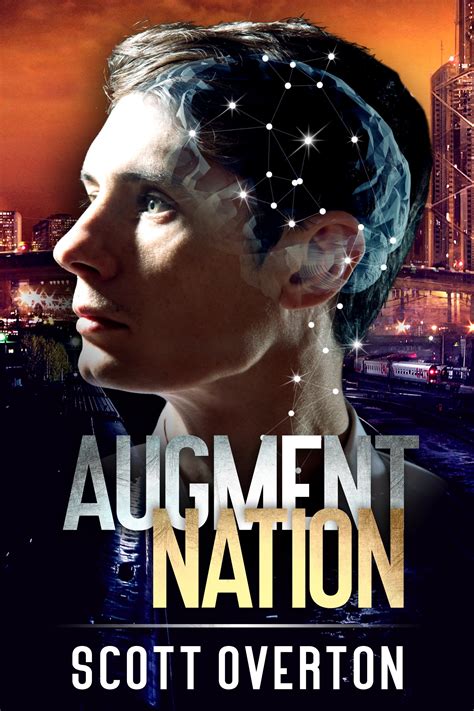
Augment Nation is a science fiction/futuristic novel by Scott Overton. Augment Nation delves into the futuristic exploration of brain-computer implants and their implications for the characters in this book. Everything has upsides and downsides, but what are the real dangers behind these? When an image pops up in your mind, is it simply a craving you’re having? Or is it a subliminal urge planted by a government or medical entity?
Augment Nation starts with Damon Leiter in the hospital. Immediately, you’ll wonder, what happened to him? Then as Damon sits there, pondering who attempted to end his life, the next questions become—who, and why does he think this?
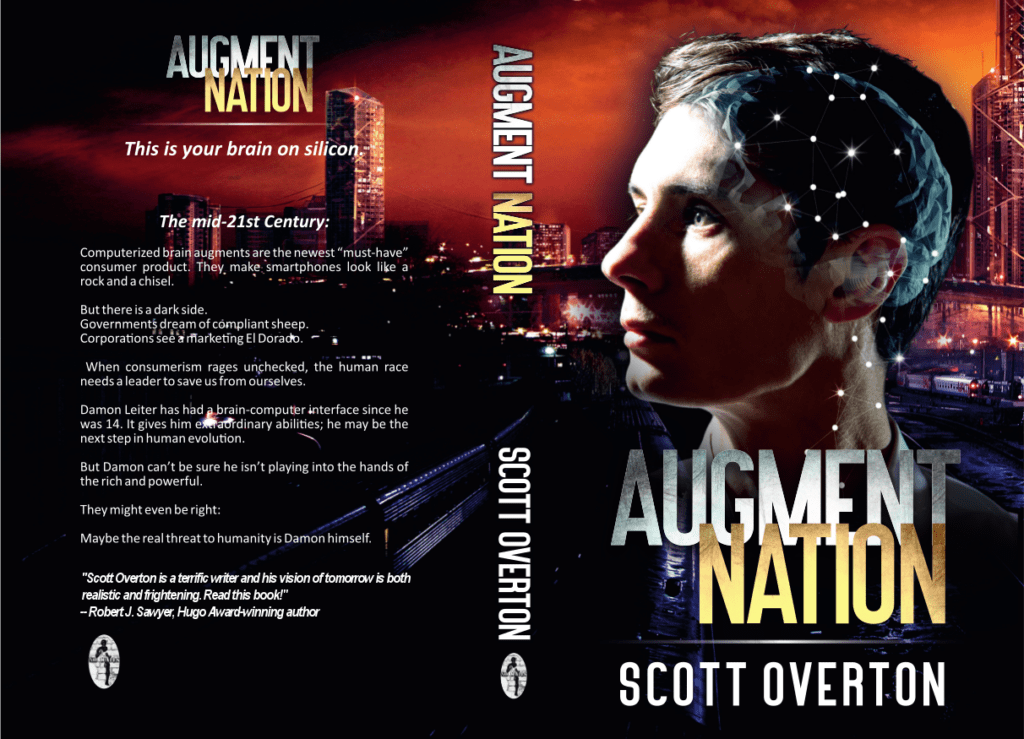
When the author takes you back to explore Damon’s memories, you’ll learn he used to be called David. And, one of the most fascinating aspects is that his past memories are clearer than his recent memories. This begs the question—what happened to disrupt the pathways to his more recent memories? What’s happening that he should remember?
Overton takes you back to Damon/David’s younger memories shortly after the incident that first sent him to the hospital. The author doesn’t reveal much detail about what happened to Damon/David, and I would have appreciated more detail to show the depth of his injuries and how he came by them. What you are provided, though, is a detailed amount of the surgery and its aftermath. Throughout the story, you get to experience Damon/David’s evolution, thanks to the implants he receives.
Throughout this book, the author takes you back and forth in time. Overton inserts medical notations concerning particular visits to the hospital or doctor for follow-ups. These notes talk about when something significant has happened and changes in the implants need to be documented. Most of the time, the story progresses in a straight line—from the initial flashback in memory to his school years to college and onward.
Damon/David’s adaptation to the implant is a trial-and-error situation. He gradually learns how it works. Of course, there are moments when he stumbles… badly. When he starts quoting Shakespeare to his teacher… look out! The minute you start thinking, this is going to end badly, you’re right. These strange symptoms push him to start studying his implant and using it for other things.
You’ll appreciate how the author doesn’t shy away from showing how Damon/David struggles in life. While his implant makes certain things “easier” for him, he doesn’t start really “abusing” that power until later in his life. In high school, he still goes through that awkward challenging phase that most struggle with. College seems to improve, but when he’s asked to take a stance against his fellow students to cut down on cheating, it creates a rift. Compared to high school, though, he’s less concerned about “making/having friends.”
As the story progresses, David becomes Damon as he seeks to distance himself from the little boy who initially received the implant. The changing of his name shows that he, too, has changed and become something more. The medical commentary continues, but there will also be some additions and changes. Other people will begin to make themselves known as they seek to influence the world around them. The question becomes—at what cost? How far are they willing to go for control and money?
The author showcases Damon’s complexity well by creating a deeply flawed character who has good intentions at times. He wants to be accepted for who he is. He struggles with his identity and how the implant directly impacts his life. Despite all of this, he’s a very intelligent individual.
Still, you’re not always going to like him or even approve of what he does.
A perfect example will present itself when a situation arises in his relationship with Valerie. She offers him an opportunity, and instead of taking the path the author hints at—he takes the one he wants.
Time and time again, the author points out the advantages Damon has. You will wonder—does he abuse these advantages? In some instances, this question will be answered; in others, the author will leave you to speculate. Then the author will turn around and, in the next few paragraphs, show that the people monitoring his implant have some documented information that is important to the storyline.
In case you haven’t already guessed, a mystery is buried in all of this. Who tried to end his life? There will be small teases at potential suspects, but the truth is that the suspect list is a big one. Getting to the meat of the matter takes a good while, and so, sometimes, you might forget there is a mystery at hand. However, it’s a multi-tiered mystery. One that surrounds the implants themselves, the advancements being made with them, and how Damon is tied to it all.
This book is tech and medical jargon-heavy, and that bogs the story down here and there. However, when the story flows, it flows really well and teases you with segments that keep you turning pages. The ending does a decent job of wrapping up the story and reveals the timeline of the latest incident that almost took Damon’s life—and why. The final pages will not be what you expect, but they are something to look forward to.
Pros:
- The detail of the narrative, and story.
- Damon’s uniqueness.
- The story’s timeline. You don’t just get flashes of memories; you’re taken back to those times as they move the story forward.
- Being allowed to watch as Damon evolves with the tech itself.
Cons:
- The storyline gets bogged down at times.
- Some jargon will require research to understand what it means.
- The mystery angle gets buried.
 Scribble's Worth
Leave a comment